Latest blog from Beyondparlife

Blog

I Know I’m Going To Get Wet… Unless! You…
10 Affordable Waterproof Picks for the Weekend Club Golfer!


Introduction

If you play golf in the UK, you already know the weather is more opponent than backdrop. We don’t get “occasional showers”—we get drizzle that lingers for hours, squalls that roll in sideways, and those charming little bursts of sunshine that lull you into optimism before another soaking. Golf and rain here are inseparable, and no amount of weather app checking changes that.

Weekend golfers feel it the most. You plan your round with military precision: tee time booked, mates lined up, trolley charged, maybe even a bacon sandwich sorted. Then you check outside, and the clouds are staging a mutiny. Cancelling isn’t an option—you’ve waited all week. So you zip up whatever jacket you own, mutter a prayer, and march out. Half an hour later, you’re drenched, your socks are sloshing, and you’re fantasising about radiators rather than birdies.

The truth is, too many golfers skimp on waterproof gear. They grab a “rain jacket” from a high-street sports shop for £20 and then wonder why it leaks faster than a garden sieve. At the other extreme, the golf industry loves to flog high-end waterproofs at £250–£350 a pop. Those jackets are brilliant—but realistically, how many weekend golfers want to spend that much? Especially when there are mortgages, family, and, let’s face it, pub tabs to think about.

Fortunately, the middle ground exists. Over the past few years, brands like Decathlon’s Inesis, Stuburt, ProQuip, Adidas, Puma, and Sunderland of Scotland have released genuinely waterproof, golf-specific kit at prices that make sense. Combine that with a pair of rain gloves and waterproof shoes, and suddenly you’re playing through storms without resembling a drowned Labrador.

This guide is about exactly that: 10 affordable waterproof essentials for the weekend golfer. I’ve reviewed jackets, trousers, gloves, and shoes, each with clickable links and real prices. The goal is to give you a full wet-weather system for around £150–£200 total—less than the cost of one so-called “premium” jacket.


What makes a good waterproof for golf?

Before the reviews, let’s set expectations. A decent golf waterproof needs to do four things well:

  1. Keep you dry: It sounds obvious, but there’s a world of difference between “water-resistant” (fine in drizzle) and “waterproof” (fine in a downpour). Always choose waterproof for UK golf.

  2. Let you swing: The biggest crime of cheap rain jackets is stiffness. If you can’t make a free swing without feeling restricted, it’s not worth it. Look for stretch panels, articulated elbows, or at least a golf-specific cut.

  3. Breathe: Staying dry on the outside but turning into a steam room inside is misery. Breathable membranes, venting, or lighter packable designs help.

  4. Last: A £30 jacket that leaks after two rounds isn’t a bargain. Affordable doesn’t mean disposable. Stick with brands that know golf.


The Top 10 Affordable Waterproof Picks

1. Inesis Men’s Golf Waterproof Rain Jacket (RW500) – £69.99

Decathlon’s Inesis range has become the go-to for value-conscious golfers. The RW500 is the pick of the lot: fully waterproof, lightweight, and cut specifically for golfers. It’s got taped seams, a decent hydrostatic rating, and folds neatly into its own pocket, so it lives happily in your bag year-round.

The best part is the fit. It’s not stiff or crunchy like a bin liner. You can make a full swing without feeling trapped, which is more than can be said for most jackets at this price. At £69.99, it’s hard to argue against this as the best affordable all-rounder.


2. ProQuip Aquastorm PX1 Waterproof Jacket – £79.00 (often £59.99 on sale)

ProQuip are practically a Scottish institution. They’ve been making rain gear for golfers for decades, and the Aquastorm is their “value” line that still packs plenty of performance.

The jacket is lightweight, breathable, and has a smart golf cut that won’t interfere with your swing. The collar is tall enough to keep the wind out but doesn’t jab your chin at address—a common flaw in cheaper designs. At full retail, £79 is fair, but when you spot it discounted to around £60, it’s a genuine steal.


3. Stuburt Endurance Waterproof Jacket – £59.99

Stuburt are underrated. While other brands fight for the limelight, Stuburt quietly produce honest, affordable golf gear that does what it says. The Endurance waterproof jacket is a perfect example.

It’s got a slightly athletic fit, without being spray-on, and it features pockets that are actually accessible when wearing a trolley strap—something many pricier jackets forget. Breathability isn’t elite, but for under £60, it’s reliable protection for the average weekend slog.


4. Sunderland Vancouver Waterproof Jacket – £74.95 (sale prices)

Sunderland of Scotland have pedigree. Their waterproofs have been trusted for generations, and the Vancouver model brings that quality into a relatively affordable bracket—if you buy it on sale.

This jacket feels premium: supple, quiet fabric, taped seams, and smart detailing. It’s protective enough for winter storms yet comfortable enough for summer showers. At full RRP, it edges toward £100+, but in sales it often drops to around £74.95, where it becomes outstanding value.


5. Inesis Waterproof Trousers – £49.99

Waterproof trousers don’t get the glory, but they’re vital. Inesis deliver again with a pair that’s practical, breathable, and generously cut to slip over your normal golf trousers.

The wide ankle zips make them easy to get on mid-round without removing your shoes. They also have proper pocket access, so you’re not fumbling around every time you need a tee. For £49.99, they’re almost too sensible not to own.


6. ProQuip Aquastorm Waterproof Trousers – £54.99–£64.99

If you want trousers that you can actually keep on for the entire round rather than just emergencies, ProQuip’s Aquastorm trousers are a step up. They’ve got a slimmer cut, reinforced hems, and are designed for comfort all day long.

The difference is subtle but noticeable. Where cheaper trousers can feel bulky or noisy, these feel more like standard golf trousers that just happen to be waterproof. For around £55–£65, they’re a worthy upgrade.


7. FootJoy RainGrip Gloves (Pair) – £24.99

This might be the single biggest performance upgrade you can make for wet golf. RainGrip gloves are designed to get grippier the wetter they become. Instead of strangling the club with white-knuckle tension, you’ll feel in control no matter how hard it’s raining.

They come as a pair, so you wear one on each hand. It feels odd at first, but once you’ve tried them in a downpour, you’ll never go back. At £24.99, they’re an essential investment for anyone who plays through British weather.


8. Adidas Waterproof Golf Shoes (Previous Season) – £59.95–£79.95

Wet socks ruin rounds. Full stop. That’s why waterproof shoes aren’t a luxury—they’re a necessity. Adidas make excellent spiked waterproof golf shoes, and the smart move is to buy last season’s models when they drop into the £60–£80 range.

They’re comfortable, stable, and almost always come with a one-year waterproof guarantee. Spiked soles help massively on greasy winter fairways. Combine them with proper waterproof trousers and you’ll walk off the course with dry feet, which is worth more than you realise until you’ve suffered the alternative.


9. Puma Ultradry Waterproof Jacket – £49.99

If you’re looking for branded style at a budget price, Puma’s Ultradry jacket is a solid option. It’s lightweight, sleek, and dependable for drizzle or moderate rain.

It won’t hold up to biblical downpours quite as well as Sunderland or ProQuip, but for regular weekend showers, it’s more than enough. At under £50, it’s one of the best-value branded jackets around.


10. Slazenger Water-Resistant Jacket – £21.99

Let’s be honest: this is the budget fallback option. At £21.99, it’s not truly waterproof—it’s water-resistant. But if you just want something cheap to chuck in the boot for emergencies, it’s not the worst idea.

It’ll survive a light shower or nine holes in drizzle, but don’t expect miracles if the heavens properly open. Still, for less than £25, it’s an emergency layer that might save your round in a pinch.


Value Comparison: Where to Spend, Where to Save

  • Must-haves: Gloves, shoes, and trousers. They protect your grip, your footing, and your comfort. Without them, your game collapses.

  • Stretch items: Jackets give you choice. The £49 Puma will do the job, but if you can stretch to £74 for the Sunderland, you’ll notice the difference.

  • Skip false bargains: Ultra-cheap jackets (<£25) are fine as backups but won’t last. If you’re serious about golf, spend at least £50–£70 for your main jacket.


Care and Maintenance

Waterproofs last longer if you treat them right:

  • Wash with non-bio detergent, never fabric softener.

  • Reproof with a DWR spray every few months.

  • Air dry in a warm room, don’t blast them on radiators.

  • Shoes: remove insoles, stuff with newspaper after wet rounds, and rotate pairs if possible.

  • Gloves: rinse in lukewarm water and air dry flat.

Do this, and even budget waterproofs can last multiple seasons.


Final Word

For around £150–£200 total, you can kit yourself out with:

  • A jacket (Inesis, Stuburt, or Sunderland on sale)

  • Waterproof trousers (Inesis or ProQuip)

  • FootJoy RainGrip gloves

  • Adidas waterproof shoes (sale models)

That’s everything you need to survive a proper UK downpour without spending a fortune.

You will get wet at some point—this is British golf, after all. But with the right affordable gear, you’ll be the one walking into the clubhouse smug, dry, and still ready for a pint, while your mate Dave sulks about his bargain-bin “waterproof” that turned into a sponge by the 7th tee.


Shop the Gear Now

Here’s the full list of recommendations in one place:

  1. Inesis RW500 Waterproof Jacket – £69.99

  2. ProQuip Aquastorm PX1 Waterproof Jacket – £79.00 (often £59.99 sale)

  3. Stuburt Endurance Waterproof Jacket – £59.99

  4. Sunderland Vancouver Waterproof Jacket – £74.95

  5. Inesis Waterproof Trousers – £49.99

  6. ProQuip Aquastorm Waterproof Trousers – £54.99–£64.99

  7. FootJoy RainGrip Gloves – £24.99

  8. Adidas Waterproof Golf Shoes – £59.95–£79.95

  9. Puma Ultradry Waterproof Jacket – £49.99

  10. Slazenger Water-Resistant Jacket – £21.99

Life After 50: Understanding Mental Health, Struggles, and Finding…

Mental health is one of those topics people used to avoid — especially for those of us over 50. For years, it was the thing you didn’t talk about at work, at home, or with friends. You just “got on with it.” But the truth is, ignoring mental health doesn’t make the struggles go away. It just makes them heavier, until they’re too much to carry.

I’ve lived enough years, and made enough mistakes, to know that mental health isn’t about weakness. It’s about being human. And when you hit your 50s, the challenges you face can look very different from the ones you dealt with in your 20s or 30s. There’s family, money, health scares, divorce, loneliness, and the nagging thought that you might have more years behind you than ahead. That can weigh on anyone.

But there’s another side. Mental health doesn’t only mean struggle. Good mental health — resilience, laughter, balance, joy — can also grow stronger with age. The trick is learning what causes the lows, what they can lead to if left unchecked, and how to find ways back to the surface.


The Unique Struggles of Mental Health After 50

When you’re over 50, life looks different. The stresses that gnaw at your mind aren’t the same as the worries of youth. Here are some of the biggest causes:

  1. Family pressures – Your children might be grown, but they don’t stop needing you. Supporting them financially, watching them struggle, or feeling distant from them can all create a quiet ache that never seems to fade. Add in elderly parents who may need care, and suddenly you’re stretched thin — emotionally and physically.

  2. Relationships – Divorce rates are high for our generation. Plenty of people in their 50s are starting again, often carrying the scars of marriages that broke down. Loneliness can creep in fast, especially if the house feels empty after the kids move out. On the other side, there’s also hope — new relationships can bring light back into your life.

  3. Health concerns – It’s not just bad knees and sore backs. Serious health scares start becoming more common, and each ache or hospital test can feed anxiety. The thought of becoming a burden weighs heavily on many of us.

  4. Work and money – Retirement is on the horizon, but not always in a comfortable way. For some, pensions and savings feel uncertain. For others, losing a sense of purpose when work slows down is its own mental health hit.

  5. Mortality and meaning – Over 50 is when many people first really face the idea of time running out. It sounds heavy, but it’s natural. The question becomes: Have I done enough? What’s left for me? Without good mental health, those questions can spiral into despair.


The Consequences If We Don’t Talk

When mental health struggles are ignored, the consequences can be devastating. For men and women over 50, these struggles can lead to:

  • Isolation – Pulling away from friends and family, convincing yourself no one understands.

  • Depression – A constant heaviness, loss of interest in hobbies or even life itself.

  • Broken relationships – Mood swings, irritability, or withdrawal can push away the very people you need most.

  • Physical health decline – Stress and anxiety raise blood pressure, weaken immunity, and fuel illness.

  • Substance dependence – Some turn to drink, pills, or unhealthy habits to numb the pain.

  • Suicidal thoughts – The darkest path, one far too many in our generation have walked.

These aren’t scare tactics. They’re realities. But they don’t have to be inevitabilities.


Can We Cure Negative Mental Health?

Here’s the tough truth: there’s no magic cure for mental health struggles. But there are ways to manage, reduce, and sometimes completely turn them around. Think of it like physical health: you don’t cure bad knees with one stretch, but with consistent effort, you can make them stronger.

  • Talk about it – Therapy, counselling, or just opening up to friends. Bottling it up is what does the damage.

  • Move your body – Exercise genuinely changes brain chemistry, lifting mood and reducing anxiety. It doesn’t have to be extreme — walking, golf, swimming.

  • Eat and sleep well – Over 50, your body doesn’t bounce back from all-nighters and fry-ups like it used to. Balanced meals and decent sleep are non-negotiable.

  • Limit the negatives – Alcohol, nicotine, toxic relationships. They don’t fix the problem; they feed it.

  • Find purpose – Whether it’s volunteering, hobbies, or spending time with grandkids, purpose is fuel for mental health.

  • Professional support – Doctors, therapists, and support groups exist for a reason. They’re not signs of weakness — they’re lifelines.


What Good Mental Health Looks Like After 50

It’s not all doom and gloom. In fact, mental health can actually improve with age, if we let it. Why? Because perspective is a gift. By this age, we’ve survived breakups, job losses, financial mistakes, and the chaos of raising kids. That resilience can become the foundation of a stronger, calmer mind.

Good mental health looks like:

  • Waking up with a sense of purpose.

  • Having energy to enjoy hobbies and social life.

  • Feeling connected — to friends, family, or a partner.

  • Laughing at yourself (instead of criticising yourself).

  • Accepting that life isn’t perfect, but it’s still worth enjoying.


A Bit About Me: Tommy’s Story

I’m not talking theory here. I’ve lived through enough mental health struggles myself to know the weight they carry. Raising kids wasn’t easy, and family problems often left me stretched to breaking point. Divorce came along, and with it a crash of confidence, loneliness, and questions about who I was anymore.

There were nights I’d sit and wonder whether I’d failed — as a husband, as a father, as a man. That’s the quiet voice of poor mental health. And if you let it grow too loud, it drowns out everything else.

But life didn’t end there. In time, I found my footing. I rebuilt myself, step by step. And here’s the part that matters most: I found the love of my life. After all the storms, there was light. Love doesn’t fix everything, but it gives you strength to face the struggles head-on. It gives you someone to laugh with, to lean on, to plan the future with.

So yes — mental health struggles are real. But so is recovery. So is joy. So is love, even when you thought it had passed you by.


Practical Tips for Everyday Mental Health

  • Routine – Wake up, eat, and sleep at roughly the same times. Your brain loves predictability.

  • Limit screen time – Doomscrolling through bad news won’t help. Replace it with music, podcasts, or actual conversations.

  • Check in with yourself – If you feel low, write down why. Often, seeing your thoughts on paper makes them less overwhelming.

  • Celebrate small wins – Walked a mile? Called a friend? Fixed that squeaky cupboard door? Count it.

  • Nature – Get outside daily. Green spaces are medicine.

  • Stay social – Meet a mate for coffee, play a round of golf, call your kids. Connection is a cure.


Final Thoughts: Balance Is Possible

Mental health struggles don’t vanish at 50. In many ways, they become sharper. But they don’t have to define you. With the right mix of talking, moving, eating well, resting, and finding purpose, you can build not just survival, but real joy.

If you’re over 50 and struggling, you’re not broken. You’re human. You’ve carried a lot, and it’s okay to put some of it down.

For me, the journey wasn’t easy — family challenges, divorce, long nights of self-doubt. But I stand here today with gratitude, with love, and with hope. Mental health is never a straight line, but each of us has the strength to keep moving forward. And that strength, over 50, is worth more than we realise.

Title: Balancing Family, Finances, Fitness, and a Touch of…

Turning 50 used to mean slippers, early nights, and a free bus pass. These days, it feels more like juggling circus balls blindfolded while riding a unicycle. Between supporting family, staying fit, worrying about money, and still wanting to live a little, life in your 50s is less about slowing down and more about learning how to balance without toppling over.

This is the age where careers peak or shift, kids fly the nest (but still text for money), and parents sometimes need extra help. It’s also the age where your body gently reminds you that you’re not 25 anymore. Yet it’s also the perfect moment to redefine how you live — and yes, how you spend. Let’s talk about balancing family, finances, fitness, and even sneaking in a bit of luxury, without losing your sanity (or your savings).


Family First… But Not at Your Own Expense

One of the toughest balancing acts in your 50s is looking after family without completely sidelining your own needs. Many of us are caught in what’s called the “sandwich generation” — supporting grown-up kids on one side and elderly parents on the other. It can feel like everyone gets a bite except you.

Here’s the truth: saying yes to every request can quickly drain both your wallet and your energy. Helping out is important, but so is setting boundaries. It’s fine to pay for your kid’s train fare home from uni. It’s less fine if you’re covering their Netflix, takeaway habits, and weekend festivals while raiding your pension pot.

Practical tip: Instead of always giving money, offer your time, advice, or even joint planning sessions. Encourage kids to budget or help parents streamline their bills. You’ll still feel involved, but you won’t become the family ATM.


Money Matters: Live Now, Save Smart

Finances in your 50s are a weird crossroads. Retirement isn’t far away, but it also feels like you still have time. The danger is swinging to one extreme — either hoarding every penny or splurging like there’s no tomorrow. Neither extreme works.

Think of money in three buckets:

  1. Essentials — the boring but important stuff (mortgage, bills, insurance).

  2. Future — pension contributions, ISAs, savings.

  3. Now — experiences, hobbies, a little indulgence.

The balance is what matters. Too much on essentials and you feel stuck. Too much on future savings and you risk never enjoying the life you’ve worked for. Too much on “now” and, well, you’ll be googling “cheap cat food” by 70.

Here’s the twist: spending well can actually support your future. Invest in things that keep you healthy, educated, and connected. They’ll pay back in quality of life later.


Fitness: Your Greatest Asset

Think of fitness as part of your financial planning. Seriously. Health costs money when it breaks down — bad backs, dodgy knees, diabetes. Staying fit isn’t just about looking good in golf trousers; it’s about saving future medical bills and keeping your independence.

If you hate the gym, fine. Walk. Swim. Play golf (and actually stretch before you swing). The goal isn’t to win a bodybuilding competition; it’s to make sure you can enjoy your life — and those dream trips — without hobbling through airports on painkillers.

A side bonus? Fitness supports your mental health, which makes you a nicer human to live with. Your family and your bank account will thank you.


Luxury Travel: Memories Are the Real Investment

Here’s the big one. When people hear “luxury travel,” they think first-class flights, five-star hotels, and emptying their retirement fund in one trip. But luxury doesn’t always mean reckless spending. It’s about quality over quantity.

Ask yourself: what experiences will you still be talking about in 10 years? A long weekend at a generic chain hotel? Or a golf-and-wellness trip in Portugal where you played a stunning course, had a spa day with your partner, and actually switched your phone off?

Luxury travel after 50 doesn’t need to mean every trip is a blowout. It means choosing fewer, better trips:

  • Golf resorts that also offer spa packages.

  • Cruises that combine culture, fitness, and indulgence.

  • Boutique hotels that focus on service, not just a bed.

And here’s the kicker — research shows people remember experiences far more than material purchases. That £3,000 on a new car model? Forgotten in a few years. That £3,000 on a bucket-list trip with your partner? Talked about for decades.

Luxury, done smart, isn’t wasteful. It’s an investment in joy, relationships, and memories.


The Balancing Act

So how do you tie this all together without feeling like a tightrope walker over Niagara Falls?

  • With family, help but don’t enable. Teach financial habits instead of bailing everyone out.

  • With money, split your income into essentials, future, and now. Respect all three.

  • With fitness, see it as an investment, not a chore. Your health is the foundation of everything else.

  • With luxury, pick experiences that add value to your life — not just expensive labels.

Balancing doesn’t mean perfection. Some months will tilt more to family, others to saving, others to a well-deserved trip. The trick is to keep adjusting, like trimming sails on a boat.


Closing Thoughts: Legacy and Living Well

As you approach the so-called “twilight” years of your career, it’s natural to think about what you’ll leave behind. A financial legacy is important, but so is the legacy of memories, health, and time well spent.

Your family won’t remember the extra hours you worked to pay for their Netflix. They will remember the holidays you took together, the golf lessons shared, the Sunday walks, and the laughter over dinner.

Money is a tool, not the end game. Fitness is your insurance policy. Family is your anchor. And a little luxury along the way? That’s the cherry on top — because after 50, you’ve earned the right to enjoy life without guilt.

So here’s the deal: don’t just save for tomorrow. Live well today, invest in yourself, and plan smart. That’s how you balance family, finances, fitness, and luxury — and come out the other side not just surviving, but thriving.

Today’s World Championship Golf Tournament


Forget Augusta. Forget St Andrews. Forget even the Ryder Cup. Today’s real golf drama unfolded at the only venue that truly matters: our local club. It was billed as the “World Championship Golf Tournament,” which in reality meant three middle-aged men pretending they’re professionals while wearing suspiciously shiny online sports gear that promised distance, forgiveness, and a better swing — none of which actually materialised.

The fuel for this historic contest? Bacon, sausage, and egg butties wolfed down in the car park before tee-off. A breakfast of champions, or at least a breakfast of three blokes pretending to be champions. The grease was still warm on the napkins when we shook hands, muttered something about “good luck, lads,” and teed it up for the most prestigious event of the golfing calendar: three men, one course, zero chance of television coverage.

The line-up?

  • Andy with his pristine set of Titleist clubs, convinced the equipment would carry him to glory.
  • Alex wielding his Cobra sticks like he was Bryson DeChambeau’s stunt double.
  • Tommy (that’s me), turning up with my trusty old Ping clubs, each one carrying more battle scars than a Scottish castle.

Hole 1: The Flying Start

Alex clearly had his Weetabix. He smashed his drive down the first with such confidence that, for a moment, we thought Sky Sports might start broadcasting live. He swaggered off with a 5.

Andy and I followed up with 6s, the kind of bogeys you could file under “respectable if no one was watching.” Already, Alex had that smirk that says, “you two are here for second place.”

But it’s a long game, and smugness is dangerous fuel.


Hole 2: Titleist Doesn’t Guarantee Accuracy

Andy stepped up on the par-4 second, his Titleist driver glistening like Excalibur. The result? A heroic slice that almost killed a duck on the pond. Alex and I tried to keep straight faces, but the duck’s disapproving quack did most of the work for us.

I found the fairway (by accident), Alex followed with another rocket, and Andy somehow scrambled a 7. The duck survived, but Andy’s dignity didn’t.


Hole 3: Ping Loyalty Pays Off (Sort Of)

I’ve always said loyalty matters in golf. My Ping irons are older than half the kids working in the clubhouse, but they’ve never let me down completely. On the third, I striped a 7-iron onto the green and two-putted for par. Yes, par. Alex and Andy could only manage bogeys.

For a brief, glorious moment, I was the leader. I puffed my chest out like a pro walking up the 18th at The Open. It lasted about ten minutes.


Hole 4: Bunker Business

Alex found the greenside bunker and immediately channelled Seve Ballesteros. One swish of the Cobra wedge and the ball popped out beautifully, rolling close enough for a tap-in. Andy tried the same thing and nearly dug his way to Australia. My Ping sand wedge? Well, it got me out… eventually.

Scorecard reality: Alex back in front, Andy muttering about “club selection,” and me realising my moment of glory was gone.


Hole 5: The Great Putter Debate

Golfers love to argue about which putter is best. Blade or mallet? Heavy or light? Doesn’t matter when all three of us missed putts inside four feet.

Andy’s Titleist putter betrayed him completely. Alex over-read the break by about six feet. And me? I just closed my eyes and hoped, which worked better than I expected.

The crowd (a pensioner walking his dog) was not impressed.


Hole 6: Andy Strikes Back

Finally, Andy’s Titleist driver delivered. He launched one straight down the middle, strutted after it, and looked like he was about to write an instruction manual. A crisp iron later and he rolled in a par putt. His arms went in the air like he’d just won The Masters.

Alex and I clapped politely, which is golf-speak for “we’re furious but can’t admit it.”


Hole 7: Cobra Bite

Alex’s Cobra clubs woke up in a big way. His drive carried so far we thought he’d need a passport to find it. Andy topped his into the rough, I scuffed mine about 150 yards, and suddenly Alex was strutting like he owned the course.

He walked off with a birdie. Andy and I staggered off with bogeys, wondering why we even bothered buying golf balls in the first place.


Hole 8: The Rough Justice

They call it rough for a reason. Andy found it, I found it, Alex found it. Only Alex managed to get out in one shot. Andy hacked his way out in three attempts, and I may still be in there somewhere.

Alex extended his lead, Andy swore his Titleist clubs were “too advanced,” and I blamed the Ping for being “too honest.”


Hole 9: Halfway Heroes

At the turn, Alex was striding ahead, Andy was threatening to list his clubs on eBay, and I was just happy my back hadn’t seized up yet.

We grabbed drinks at the halfway house. Andy ordered an isotonic sports drink, Alex had an energy bar, and I had a sausage roll. Nutrition is a matter of perspective.


Hole 10: Second-Wind Syndrome

Fueled by pork and pastry, I found form again. My Ping driver sent one down the middle, irons on target, and a smooth two-putt for par. Alex looked rattled. Andy looked lost. For a hole, at least, Tommy was back in business.


Hole 11: The Titleist Tantrum

Andy had a meltdown. He chunked his approach into a ditch, then skulled the recovery shot over the green. His putter betrayed him again, and he stormed off with a 9.

Alex whispered, “he’s going to bin those clubs tonight.” I just nodded and marked down the score with as much sympathy as a man can muster while laughing internally.


Hole 12: Cobra Consistency

Alex was robotic. Fairway, green, two putts. Easy par. I three-putted from 15 feet, Andy muttered something about the “wrong shaft flex,” and the gap widened.


Hole 13: Ping Pride

On the par-3, my Ping 7-iron finally earned its keep. Sweet strike, straight at the flag, landed pin-high. Andy went long, Alex went short, and for once I had the bragging rights. Walking off with a par felt like winning Wimbledon.


Hole 14: The Lost Ball Lottery

Alex pulled one left, Andy pushed one right, and I dribbled one straight down the middle. For a moment, chaos reigned. We found Alex’s ball under a hedge, Andy’s in a bunker, and mine sitting proudly on the fairway.

It didn’t matter. Alex somehow scrambled another par, proving once again that golf is 80% luck and 20% Cobra.


Hole 15: Fitness Test

By this point, the legs were going. Andy’s shirt was sticking to him, I was inventing new back stretches, and Alex looked irritatingly fresh. He even did a little jog up the fairway, which we both agreed was unnecessary and offensive.


Hole 16: The Collapse

I’d love to say I fought bravely until the end, but the truth is I collapsed. My swing shortened, my grip loosened, and the Ping clubs started to feel like medieval weapons. A triple bogey ended my faint hopes.

Andy wasn’t faring much better. His face said “pro,” his scorecard said “hack.”


Hole 17: Alex Secures It

Alex birdied the 17th to put the result beyond doubt. He actually fist-pumped, which we agreed should carry a two-shot penalty in friendly golf.

Andy tried to remind us that “it’s about enjoying the game,” but he was already Googling “how to sell Titleist clubs” on his phone.


Hole 18: The Prestigious Finish

The final hole was played with as much ceremony as we could muster. Alex marched up the fairway like a champion. I trudged along, Ping in hand, muttering about bad luck. Andy made one last attempt at a miracle drive, but it went sideways faster than a shopping trolley with a dodgy wheel.

We tapped in our putts, shook hands like true professionals, and announced Alex as the winner of the World Championship Golf Tournament.


Post-Match Reflections

  • Andy: Learned that Titleist doesn’t come with a guarantee against double digits.
  • Tommy (me): Proved that loyalty to Ping is worth at least a couple of pars.
  • Alex: Walked away with glory, smugness, and a new nickname: “Local Cobra.”

Beyond the Banter: Why This Matters

Here’s the thing: yes, we’re three ordinary blokes hacking our way around a golf course, pretending it’s the World Championship. Yes, the banter is merciless and the golf is rarely pretty. But days like this are about more than scorecards.

Being out with friends, laughing at each other’s disasters, celebrating the rare good shots, and just spending time together outdoors — it does more for your mental health than any app or self-help book. Golf gives us structure, a reason to connect, and a way to shake off stress.

The World Championship was never about who won (although Alex will be insufferable for weeks). It was about friendship, fresh air, and the reminder that life after fifty is better when you’ve got mates to share it with.

So here’s to more bacon butties, more terrible shots, and more days that prove golf really is about more than golf.

The top three golf destinations in Europe to take…


The Top Three Golf Destinations in Europe to Take the Wife

Golf trips aren’t just for the lads. If you’re over fifty, working hard, and finally starting to prioritise time away, a golfing holiday with your partner can tick every box: great courses, comfortable hotels, stunning surroundings, and plenty to do beyond the fairways. The key is picking destinations that work for both of you—not just places where you disappear onto the course and she’s stuck staring at the hotel wallpaper.

Here are my top three golf destinations in Europe to take the wife. They’re tried, tested, and offer that perfect blend of golf, relaxation, food, and culture.


1. The Algarve, Portugal

If there’s a capital of European golf, it’s the Algarve. This stretch of Portuguese coastline is packed with world-class courses, golden beaches, and resorts that understand couples want comfort, not chaos.

Why it Works for Golfers

  • Courses: Vilamoura is the epicentre, with the legendary Victoria, Old Course, and Quinta do Lago just a short drive away. All beautifully maintained, with layouts that test but don’t punish.
  • Weather: Reliable sunshine most of the year. You can escape a British winter and play in short sleeves in January.
  • Facilities: Resorts are set up for golfers—practice areas, rental clubs, and transfers all sorted.

Why it Works for Wives (and Partners)

  • Beaches: Miles of sandy coastline, perfect for long walks, sunbathing, or simply watching the sunset with a glass of vinho verde.
  • Spas: Most resorts here have excellent spas—massages, treatments, the lot. Perfect while you’re battling bunkers.
  • Food: Fresh seafood, grilled sardines, peri-peri chicken, and superb wine. Dining out is relaxed and affordable.

Off-Course Fun

  • Day trips to Faro’s old town, boat rides through the caves of Lagos, or browsing the shops in Albufeira. Plenty to keep both of you entertained.

Verdict: The Algarve is unbeatable for a couple’s golf break. You get variety and sunshine; she gets beaches, spas, and culture. Everyone wins.


2. Costa del Sol, Spain

Known as the “Costa del Golf,” this southern stretch of Spain has been welcoming golfers for decades. It’s lively, glamorous in places, and still one of the easiest golf destinations to reach from the UK.

Why it Works for Golfers

  • Courses: Valderrama is the jewel, often ranked Europe’s best, but the likes of La Cala, Santana, and Finca Cortesin are also top class. Variety is huge—you could play a different course every day for weeks.
  • Accessibility: Dozens of flights into Malaga, short transfers, and golf packages everywhere.
  • Climate: Hot summers, but spring and autumn are perfect.

Why it Works for Wives (and Partners)

  • Luxury Resorts: Places like Marbella and Estepona have stunning hotels where relaxation is as much a sport as golf.
  • Shopping and Style: Marbella’s old town and Puerto Banús are made for strolling, boutique shopping, and people-watching.
  • Food & Tapas Culture: From beach-side chiringuitos to Michelin-starred restaurants, the food scene is incredible.

Off-Course Fun

  • Day trips to Malaga for museums and culture, Ronda for dramatic scenery, or even a ferry to Morocco for the adventurous.

Verdict: The Costa del Sol is perfect if you want serious golf combined with a lively atmosphere, great food, and plenty for your partner to explore while you’re out on the fairways.


3. The Scottish Highlands, Scotland

You don’t always need sunshine for a romantic golf break. Scotland offers something very different: dramatic landscapes, history, whisky, and some of the most breathtaking golf courses in the world.

Why it Works for Golfers

  • Courses: Royal Dornoch is the headline act—often rated one of the best on the planet. Castle Stuart (now Cabot Highlands) near Inverness is another gem, with views that make you stop mid-swing.
  • Authenticity: This is golf in its purest form—links layouts, rolling dunes, and history in every bunker.
  • Challenge: If you want to test yourself while soaking in scenery, this is the place.

Why it Works for Wives (and Partners)

  • Scenery: The Highlands are spectacular. Mountains, lochs, castles—it’s like playing golf inside a postcard.
  • Culture: Whisky distilleries, Highland villages, and centuries of history. Even non-golfers fall in love with the area.
  • Cosy Stays: Think boutique hotels, country houses, and log fires—not just modern resorts.

Off-Course Fun

  • Visit Loch Ness, explore Inverness, or tour whisky distilleries together. Long drives through the Highlands are as memorable as the rounds of golf.

Verdict: The Highlands give you and your partner an experience rather than just a holiday. Golf for you, romance and adventure for both.


Final Thoughts

Taking your wife on a golf holiday doesn’t mean dragging her around while you disappear for six hours a day. The best destinations offer something for both of you: challenging golf, beautiful resorts, food you’ll both rave about, and activities off the course.

  • The Algarve offers sun, relaxation, and great value.
  • Costa del Sol brings glamour, world-class golf, and a buzzing atmosphere.
  • The Scottish Highlands deliver scenery, history, and a unique sense of romance.

Pick wisely, and your golf holiday becomes a shared adventure—time together, time on the course, and memories that last longer than your scorecard.


The best way to prepare for the course


Fuelling the Swing: The Best Nutrition and Warm-Up Before Golf .

Golf after fifty isn’t just about hitting the ball straighter or keeping up with younger players. It’s about keeping your body moving comfortably for four or five hours, avoiding those mid-round crashes, and making sure you’re not hobbling into bed that night. Two things make all the difference: how you fuel your body before the round, and how you warm it up.


Why Golfers Over 50 Need to Think Differently

The truth is, our bodies don’t process food or recover from exertion the same way they did at 25. Muscle mass naturally declines, digestion slows, and hydration needs change. Add in longer recovery times and the odd ache that arrives uninvited, and suddenly preparation becomes just as important as the clubs in your bag.

Good nutrition and a proper warm-up aren’t about being fussy. They’re about giving yourself a fighting chance to play the game you love without the wheels coming off by the 14th hole.


Pre-Golf Nutrition: What to Eat Before a Round

The golden rule: steady fuel, not quick fixes. Skip the fry-up or the energy drink. You want foods that give you lasting energy without spiking blood sugar or upsetting digestion.

Timing

  • Eat a balanced meal 1–2 hours before tee-off.
  • If you’re an early bird with a 7 a.m. start, aim for something light but substantial.
  • If you’ve got a later tee time, a proper breakfast or early lunch will carry you through.

The Over-50 Power Breakfast

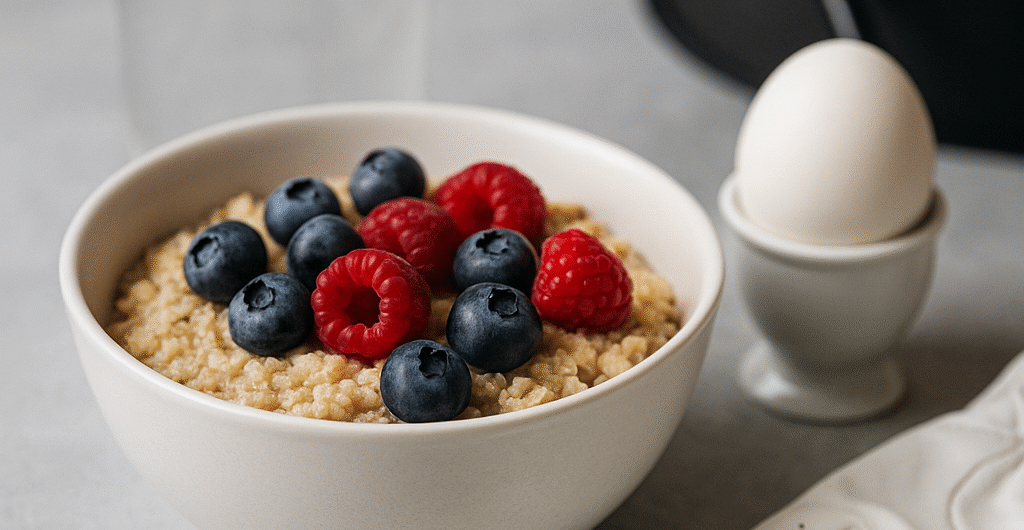
  • Porridge oats with berries and a handful of nuts – easy to digest, keeps you full, and provides slow-release energy.
  • Wholegrain toast with eggs and avocado – protein for muscle support, healthy fats for joint health, and fibre to keep digestion steady.
  • Greek yoghurt with fruit and seeds – quick, portable, and packed with protein and calcium (good for bones that have seen a few decades).

Mid-Morning Snacks (if you’re hungry just before tee-off)

  • A banana (potassium helps with muscle function).
  • A small handful of almonds or cashews.
  • An oat bar that isn’t loaded with sugar.

Hydration: The Silent Weapon

Most golfers over fifty are walking around half-dehydrated without realising it. Even mild dehydration makes joints stiff, saps energy, and clouds concentration.

  • Start hydrating early. Don’t wait until you’re on the first tee—drink water in the hours before.
  • Go easy on coffee. One cup is fine, but too much caffeine can dehydrate and leave you jittery.
  • Electrolytes matter. A sugar-free electrolyte drink before or during the round can help replace what you lose in sweat, especially on warmer days.

Warm-Up: The Over-50 Essentials

We all know the temptation: turn up ten minutes before tee-off, wave your arms about a bit, then hit driver straight away. That’s a recipe for a pulled muscle, a stiff back, or at the very least three holes of “loosening up.”

A proper warm-up doesn’t take long. Ten minutes is all you need. The goal is simple: get blood flowing, loosen joints, and wake up the muscles that matter for your swing.

Step 1: Loosen the Body

  • Neck rolls and shoulder shrugs – ease out tension from sleep or sitting.
  • Torso twists – hands across chest, rotate slowly left and right.
  • Hip circles – gentle, controlled, like you’re hula-hooping in slow motion.

Step 2: Activate Key Muscles

  • Bodyweight squats (10 reps) – wakes up quads and glutes for stability.
  • Lunges (5 each side) – engages hips and balance.
  • Plank (20–30 seconds) – switches on the core without straining.

Step 3: Golf-Specific Moves

  • Club across shoulders twists (10 reps each way).
  • Half-swings with a wedge. Focus on rhythm, not power.
  • Finish with two or three smooth full swings.

By the time you step onto the first tee, your body is ready, your swing feels freer, and you’ve avoided that stiff “first three holes” shuffle.


What to Avoid Before Golf

Over 50s have to be a bit smarter about what not to eat or drink before a round:

  • Greasy fry-ups – they’ll weigh you down and send you searching for the nearest bench by the 7th.
  • Sugary snacks – quick boost, big crash.
  • Too much alcohol the night before – obvious, but still the cause of many wobbly rounds.
  • Skipping food altogether – you’ll hit the wall by the back nine.

On-Course Fuel

Even if you eat and hydrate perfectly before the round, four hours of walking and swinging will burn through reserves. Over-50 golfers should pack light, easy snacks to keep energy steady:

  • A banana or apple.
  • A small packet of trail mix.
  • A protein bar with low sugar.
  • Water bottle you sip every few holes.

Think of it as topping up the tank. You don’t need a three-course meal at the halfway house, just enough to keep body and brain ticking.


The Funny Truth

Let’s be honest—warm-ups and nutrition aren’t glamorous. Most golfers over fifty are more worried about finding their ball than finding their macros. But here’s the catch: the little things matter more now. You can get away with a bacon butty and a quick yank of the driver at 25. At 55, that’s a pulled hamstring waiting to happen.

There’s humour in it too. I’ve seen blokes stretch like they’re auditioning for a yoga video while still spraying the first drive into the trees. I’ve also seen someone bend down cold to tee up, groan like an old hinge, and mutter “that’s me done for the day” before they’ve even swung. The point is, preparation won’t make you a pro, but it will give you the best shot at enjoying the game—and isn’t that the whole point?


The Bottom Line

For golfers over fifty, the right nutrition and warm-up are as important as the clubs in your bag.

  • Eat steady, balanced meals before you play.
  • Hydrate properly (and start early).
  • Warm up for ten minutes—focus on joints, muscles, and golf-specific moves.
  • Keep energy topped up with small snacks and water during the round.

It doesn’t need to be complicated, and it doesn’t need to be perfect. It just needs to be consistent. A little prep before each round means more energy, fewer aches, and better golf.

That’s how you fuel the swing, keep the body moving, and make sure golf stays fun well into your fifties, sixties, and beyond.

Golf, Fitness and wellbeing after 50 Beyond par life…


Beyond Par Life: Staying Fit, Playing Golf, and Living Well After 50

Turning fifty doesn’t mean slowing down. For me, it’s been quite the opposite. I’ve learned that this stage of life can be about strength, balance, and enjoying the things we love—like golf—while also protecting our physical and mental health. My name’s Tommy, and this space is about building a lifestyle that keeps us swinging the club with energy, travelling to beautiful courses, and making the most of life without breaking the bank.

Why Golf and turning 50 gives time to reflect

Golf is more than a game. It’s a chance to get outside, move the body, and calm the mind. For many of us over fifty, it also offers a way to stay socially connected while staying physically active. But let’s be real: as the years add up, we don’t recover quite as quickly as we used to, the swing feels a bit stiffer, and sometimes the mind gets just as tired as the muscles.

That’s where fitness and mental wellbeing come in. Staying fit doesn’t mean chasing six-packs or running marathons. It’s about smart training that helps us keep moving well, staying strong enough to avoid injury, and being mentally sharp enough to enjoy every round.

 We love these places, Book your Dreams here !

    https://www.expedia.co.uk/shop/beyondparlife/luxury-cruises-after-50